

SEO Best Practices for Modern Websites in 2025
28 January, 2025SEO in 2025 is about user experience, technical excellence, and quality content. The old tricks don't work anymore—Google's algorithms are smarter, and so should your SEO strategy be. Search Engine Optimization has transformed from a technical discipline focused on manipulating rankings to a holistic approach centered on creating genuine value for users.
The Evolution of SEO: From Keywords to User Experience
Search Engine Optimization has evolved dramatically since its inception. In the early days, SEO was primarily about keyword stuffing, meta tag optimization, and building as many backlinks as possible. However, Google's algorithm updates, particularly Panda, Penguin, and more recently, the Helpful Content Update, have fundamentally changed what it takes to rank well.
Today, SEO is about creating valuable experiences that both users and search engines love. The focus has shifted from gaming the system to genuinely helping users find what they're looking for. This user-centric approach isn't just more ethical—it's more effective and sustainable in the long term.
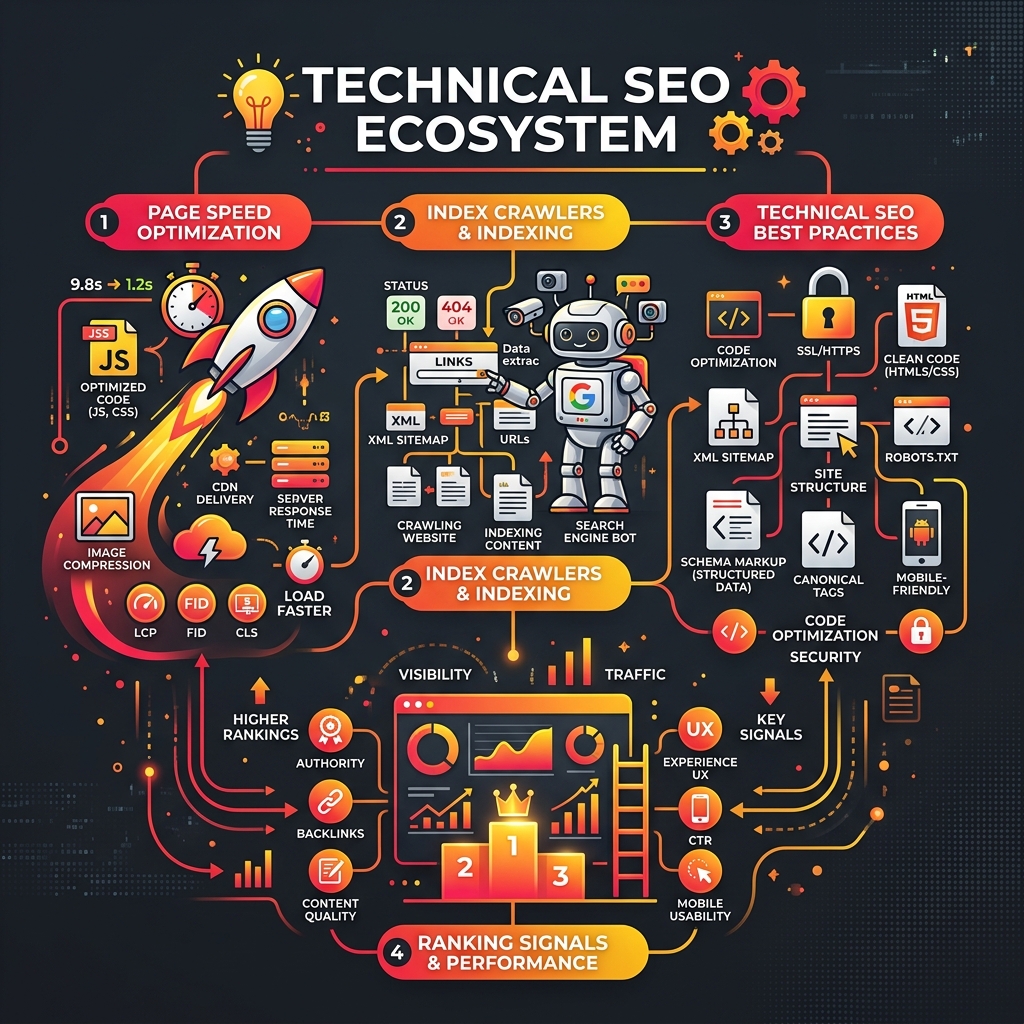
At CODX, we've helped businesses rank higher by focusing on what actually matters: fast load times, mobile optimization, quality content, and user engagement. The results speak for themselves—better rankings, more organic traffic, and higher conversions. Our approach combines technical expertise with strategic content creation to deliver sustainable SEO results.
Core Web Vitals: The Foundation of Modern SEO
Google's Core Web Vitals are three specific metrics that measure real-world user experience: Largest Contentful Paint (LCP), First Input Delay (FID), and Cumulative Layout Shift (CLS). These metrics have become ranking factors, making them essential for SEO success in 2025.
Largest Contentful Paint (LCP)
LCP measures loading performance by tracking when the largest content element becomes visible. For optimal user experience, LCP should occur within 2.5 seconds of when the page first starts loading. Slow LCP scores indicate that users are waiting too long to see the main content, which leads to higher bounce rates and lower engagement.
To improve LCP, focus on optimizing your largest content elements: images, videos, and hero sections. Use modern image formats like WebP, implement lazy loading for below-the-fold content, and optimize server response times. Consider using a Content Delivery Network (CDN) to serve content from locations closer to your users.
First Input Delay (FID)
FID measures interactivity by tracking the time from when a user first interacts with your page (clicks a link, taps a button) to when the browser can begin processing that interaction. A good FID score is under 100 milliseconds. Poor FID scores mean users experience lag when trying to interact with your site, creating frustration and abandonment.
To improve FID, minimize JavaScript execution time, break up long tasks, and optimize third-party scripts. Use code splitting to load only necessary JavaScript, defer non-critical scripts, and consider using web workers for heavy computations. Reducing the main thread work improves responsiveness and user experience.
Cumulative Layout Shift (CLS)
CLS measures visual stability by tracking unexpected layout shifts during page load. A good CLS score is under 0.1. High CLS scores indicate that content is jumping around as the page loads, which creates a poor user experience and can cause users to click the wrong elements.
To improve CLS, always include size attributes on images and videos, reserve space for ads and embeds, and avoid inserting content above existing content. Use CSS aspect ratio boxes to maintain space for dynamic content, and ensure fonts are loaded properly to avoid text shifting.
Mobile-First Indexing: The New Standard
Google's mobile-first indexing means that Google primarily uses the mobile version of your site for indexing and ranking. This shift, which became the default in 2021, means that your mobile site's performance directly impacts your search visibility.
Mobile-first design isn't just about responsive layouts—it's about ensuring that your mobile site has the same content, structure, and functionality as your desktop site. Google needs to be able to crawl and index all your important content on mobile devices.
Ensure your mobile site is fully optimized by using responsive design, optimizing images for mobile, implementing touch-friendly navigation, and ensuring fast load times on mobile networks. Test your site on real mobile devices and use Google's Mobile-Friendly Test tool to identify and fix issues.
E-E-A-T: Building Trust and Authority
E-E-A-T stands for Experience, Expertise, Authoritativeness, and Trustworthiness. These factors help Google determine whether content is reliable and valuable. While E-E-A-T is particularly important for YMYL (Your Money or Your Life) topics, it's becoming increasingly relevant for all types of content.
Experience
Google wants to see that content creators have real-world experience with the topics they're writing about. This means demonstrating firsthand knowledge, sharing personal insights, and providing unique perspectives based on actual experience rather than just research.
Expertise
Expertise means having deep knowledge in your subject area. This can be demonstrated through credentials, years of experience, industry recognition, or demonstrated mastery. Show your expertise through detailed, accurate content that goes beyond surface-level information.
Authoritativeness
Authoritativeness is about being recognized as a leading source in your field. This can be built through citations, mentions by other authoritative sources, industry awards, speaking engagements, and a strong reputation within your community.
Trustworthiness
Trustworthiness is about being reliable, honest, and transparent. This includes having clear author information, transparent business practices, secure websites, and accurate information. Build trust through consistent, reliable content and transparent communication.
Technical SEO: The Foundation of Search Visibility
Technical SEO ensures that search engines can crawl, index, and understand your website. Without solid technical SEO, even the best content won't rank well. Technical SEO encompasses site structure, crawlability, indexability, and site performance.
Site Structure and Architecture
A well-structured site makes it easy for both users and search engines to navigate and understand your content. Use logical URL structures, create clear navigation hierarchies, implement breadcrumbs, and ensure important pages are no more than 3-4 clicks from the homepage.
Create a sitemap.xml file that lists all important pages and submit it to Google Search Console. Use internal linking strategically to distribute page authority and help users discover related content. A flat site structure is generally better than a deep hierarchy for both SEO and user experience.
Schema Markup and Structured Data
Schema markup helps search engines understand your content better and can enable rich snippets in search results. Implement schema for your business information, products, articles, reviews, and other relevant content types. This can improve click-through rates and help your content stand out in search results.
Crawlability and Indexability
Ensure search engines can crawl your site by creating a proper robots.txt file, fixing crawl errors, and avoiding blocking important pages. Use canonical tags to prevent duplicate content issues, and ensure that important content isn't hidden behind JavaScript that search engines can't execute.
Content Strategy: The Heart of SEO
Quality content is the foundation of successful SEO. Search engines reward content that genuinely helps users, answers their questions, and provides unique value. In 2025, content strategy must focus on user intent, comprehensiveness, and originality.
Understanding User Intent
Modern SEO requires understanding what users are really looking for when they search. Google's algorithms have become sophisticated at understanding intent, so your content must match what users actually want. There are typically four types of search intent: informational, navigational, transactional, and commercial investigation.
Create content that matches user intent. If users are looking for information, provide comprehensive, educational content. If they're ready to buy, provide clear product information and easy paths to purchase. Understanding intent helps you create content that both users and search engines value.
Comprehensive Content Creation
Google favors comprehensive content that thoroughly covers topics. Instead of creating multiple thin pages, create fewer, more comprehensive pages that provide complete answers. This approach often performs better in search results and provides more value to users.
Use topic clusters to organize related content around pillar pages. This creates a logical content structure that helps both users and search engines understand the relationships between your content pieces. Internal linking between related content strengthens this structure and distributes page authority.
Keyword Research and Optimization
While keyword stuffing is dead, strategic keyword use remains important. Research keywords that your target audience actually uses, understand search volume and competition, and optimize content naturally around these terms. Focus on long-tail keywords that match specific user queries.
Use keywords in titles, headings, meta descriptions, and naturally throughout content. But prioritize readability and user value over keyword density. Modern SEO is about semantic relevance and topic coverage, not exact keyword matching.
"SEO is not about gaming the system—it's about creating value."
- CODX SEO Team
Local SEO: Dominating Local Search
For businesses serving local markets, local SEO is essential for visibility and customer acquisition. Local SEO helps your business appear in local search results, Google Maps, and "near me" searches.
Google Business Profile Optimization
Your Google Business Profile is crucial for local visibility. Ensure your profile is complete, accurate, and optimized with relevant categories, business hours, photos, and descriptions. Keep information up-to-date and respond to reviews promptly and professionally.
Local Citations and NAP Consistency
NAP (Name, Address, Phone number) consistency across all online listings is essential for local SEO. Ensure your business information is identical everywhere it appears online. Build citations on relevant local directories, industry-specific sites, and local business listings.
Location-Based Content
Create content that's relevant to your local area. This could include local news, events, community involvement, or location-specific service pages. Local content helps you rank for location-based searches and demonstrates your connection to the community.
Link Building: Quality Over Quantity
Link building has evolved from quantity-focused to quality-focused. Google's algorithms now prioritize high-quality, relevant links from authoritative sources. Focus on earning links through valuable content, relationships, and genuine value rather than manipulative tactics.
Content-Driven Link Building
Create content that others want to link to. This could be original research, comprehensive guides, unique data, or valuable resources. High-quality content naturally attracts links from other websites, creating sustainable link growth.
Relationship Building
Build relationships with other websites, bloggers, and influencers in your industry. These relationships can lead to natural link opportunities, guest posting opportunities, and collaborative content projects. Focus on providing value to these relationships rather than just asking for links.
Page Speed Optimization: The Need for Speed
Page speed is a ranking factor and directly impacts user experience. Slow-loading pages have higher bounce rates, lower engagement, and reduced conversions. Optimizing page speed is essential for both SEO and business success.
Image Optimization
Images are often the largest elements on a page. Optimize images by using modern formats (WebP, AVIF), compressing files, and implementing lazy loading. Use responsive images with srcset to serve appropriately sized images to different devices.
Code Optimization
Minimize CSS and JavaScript files, remove unused code, and implement code splitting. Use minification and compression to reduce file sizes. Consider using a Content Delivery Network (CDN) to serve static assets from locations closer to users.
Caching Strategies
Implement browser caching and server-side caching to reduce load times for returning visitors. Use caching plugins or server configurations to cache static content and database queries. This significantly improves page speed and reduces server load.
Measuring SEO Success
Effective SEO requires ongoing measurement and optimization. Track key metrics to understand what's working and what needs improvement.
Key Metrics to Monitor
- Organic Traffic: Track overall organic search traffic and trends
- Keyword Rankings: Monitor positions for target keywords
- Click-Through Rate (CTR): Measure how often searchers click your results
- Conversion Rate: Track how many visitors take desired actions
- Core Web Vitals: Monitor LCP, FID, and CLS scores
- Backlink Profile: Track new links and link quality
Tools for SEO Measurement
Use tools like Google Search Console, Google Analytics, and third-party SEO tools to track performance. Google Search Console provides insights into how Google sees your site, while Google Analytics shows how users interact with your site. Combine data from multiple sources for a complete picture.
Common SEO Mistakes to Avoid
1. Ignoring Mobile Optimization
With mobile-first indexing, ignoring mobile optimization is a critical mistake. Ensure your site works perfectly on mobile devices, loads quickly, and provides excellent user experiences.
2. Thin or Duplicate Content
Creating thin, low-value content or duplicating content across pages hurts SEO. Focus on creating comprehensive, original content that provides real value to users.
3. Neglecting Technical SEO
Even the best content won't rank if search engines can't crawl or index your site properly. Invest in technical SEO to ensure your site is accessible and understandable to search engines.
4. Keyword Stuffing
Overusing keywords in an attempt to rank higher actually hurts your SEO. Modern algorithms penalize keyword stuffing. Use keywords naturally and focus on creating valuable content.
5. Ignoring User Experience
SEO and user experience are now inseparable. Poor user experience signals (high bounce rates, low time on site) can hurt rankings. Focus on creating excellent user experiences that keep visitors engaged.
The Future of SEO
SEO continues to evolve, with emerging trends shaping the future of search optimization. Voice search, AI-powered search, and personalized results are changing how people find information online.
Voice search optimization requires understanding natural language queries and conversational search patterns. AI and machine learning are making search results more personalized and context-aware. These trends require SEO strategies that focus on natural language, user intent, and providing comprehensive answers.

Conclusion: Building Sustainable SEO Success
The future of SEO is user-centric. Search engines reward sites that provide excellent user experiences. Focus on speed, usability, and value—the rankings will follow. SEO in 2025 isn't about quick wins or manipulative tactics—it's about building a sustainable strategy that creates genuine value for users.
Need help with SEO? CODX offers comprehensive SEO services that combine technical expertise with content strategy to boost your search visibility. Our team stays current with the latest SEO trends and algorithm updates to ensure your site performs at its best.
Whether you're starting from scratch or optimizing an existing site, the principles outlined in this guide provide a solid foundation for SEO success. Remember: SEO is a long-term investment that requires patience, consistency, and a focus on creating value for users.
"In 2025, SEO success comes from putting users first—search engines will reward you for it. Build for users, optimize for search engines, and success will follow."